
You are replacing a system the business depends on
Migration without a big-bang cutover, with the old and new running side by side.
Web platforms, mobile apps, backends and APIs for companies that will run the product long after launch. Senior engineers, domain-driven design, automated infrastructure, and a written status every day until you tell us weekly is enough.


Migration without a big-bang cutover, with the old and new running side by side.
A rescue starts with a diagnosis. For a New York developer we rebuilt the backend of an offshore first version and had the platform live a month after it was written off.
APIs and infrastructure designed around expected traffic and the integrations your business needs. In Financial Trail a single case can hold 1.5 million transaction records from 350 files, and a filter still has to come back in seconds.
Finance, public sector, healthcare: clear rules for who can see or change data, with records of sensitive actions. We plan those controls with the people who know your domain.
Node.js, NestJS, Fastify, Java, Python, Go, .NET and Laravel, usually on PostgreSQL. APIs follow your business rules, with tests, documentation and the integrations your operations depend on.
React, Angular and React Native on a design system, with accessibility built in. For the WSB Merito platform we documented WCAG 2.1 AA compliance for a ministerial audit.
AWS, Azure or GCP with Terraform or Pulumi. We set up deployment and monitoring so your team can inspect how the system runs.

We discuss how the system will be operated before deciding how to build it.

We define who owns each record and where responsibilities sit in the system before building features on top.

We plan staged releases and define how to roll back a change before moving production traffic.

We define who can read or change each kind of record, which actions need an audit trail and where data may be stored. The role model we built for a US campaign-finance platform covers every election tier, from city council to presidential campaigns.
A New York construction developer with 100+ high-rises had a first version built offshore. It worked, but nobody could maintain it.
We rebuilt the backend from scratch instead of patching it, which cost roughly 400 unplanned hours. We also took the empty product-owner seat: the client had about three hours a week to give, so the team brought a proposal and its consequences to every meeting.
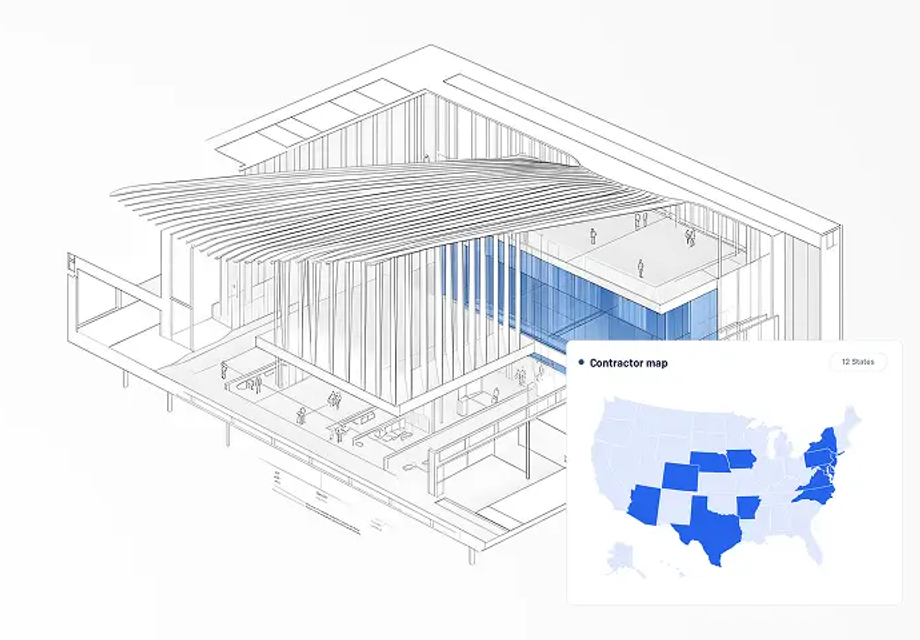
The platform went live in scope and on schedule, one month after the project was written off; the engagement itself began earlier. It runs on five core modules (projects, contracts, payments, invoices, approvals) for three user roles. The case study also says what we would do differently: push for a defined scope and business-analysis time before agreeing to a fixed price.


Their ability to quickly deliver high-quality solutions while maintaining transparency in communication is rare.
Server-side logic, integrations and data pipelines with tests and documentation from day one.
Read moreCustomer portals and internal applications in React or Angular, with reusable components and checks against agreed accessibility requirements.
Read moreReact Native apps for iOS and Android, connected to your backend and tested for the devices and platform behavior agreed in scope.
Read moreInfrastructure as code, CI/CD, observability and cost control on AWS, Azure or GCP.
Read moreDiagnosis, stabilization and a plan for a product someone else built. Then we run it or hand it back.
Read moreA stream of its own for customer reports, regressions and compatibility fixes, so your team keeps building the roadmap.
Read morePayment, blockchain data and financial oversight integrations, with traceable records and checks for failed, delayed or repeated transactions.
Read moreProgress reported in writing
We set deadlines once the design is final, counted in working days, not as dates promised in a sales call. You get a written status every day while we are new to each other, weekly once trust is there, and alternatives with context whenever we hit a wall.

Pirxey gave us the full package: frontend, backend, AI and data, all under one roof, which meant we never had to coordinate multiple vendors.

Internal kick-off first: stakeholders, integrations, design, risks, a critical look at the proposed stack. Then an external workshop with your team: business outcome, hard and soft deadlines, who decides what. You get a written scope and a prioritized backlog.

Domain model, service boundaries, infrastructure and a migration path, written down and reviewed with you. Estimates per module, so you can cut scope without cutting quality. For a new product, a clickable prototype lets users check the workflow before the full build, and its frontend carries forward into the product.

We build in deployable increments with code review and automated tests. QA and product people check working features against the agreed behavior. You get a status daily at first, then weekly once trust is there. Scope lives in Linear; conversations happen in Slack.

Monitoring, runbooks and documentation handed over, or we stay as the team that runs it. Either way, nobody is left alone with a system they do not understand.


"Pirxey gave us the full package - frontend, backend, AI, and data - all under one roof, which meant we never had to coordinate multiple vendors. They thought like product owners, not contractors."

"What stayed with me was the communication. Fast, clear, and always with something concrete - a proposal, an update, a solution. We never had to wonder what was happening."
"Their ability to quickly deliver high-quality solutions while maintaining transparency in communication is rare."

"When you propose something to them, they don't simply say yes - they come back with a pro and con. You're not getting a classic developer who simply does and then you have to fix the thinking yourself. If I had another AI idea and wanted to pursue it, I would just use Pirxey."

"Well… didn't know what to expect but honestly, now I'm learning much from you guys. Had no idea an external tech partner can be so pro and organized."
"Their ability to quickly deliver high-quality solutions while maintaining transparency in communication is rare."

Our rule is that the client never learns about a problem from a missed deadline. They learn about it from us, with options, while there is still time to choose.
Custom software delivery

Writes the domain model and service boundaries down before features go on top. On our six-week build, the review rules asked the same five scale questions of every change, from bounded queries to a job that arrives twice.
Architecture and APIs

Starts every interface on a component library and a design system, with accessibility part of done. On WSB Merito that meant WCAG 2.1 AA compliance documented for a ministerial audit.
Web and mobile interfaces

Sets up infrastructure as code, a pipeline that deploys every accepted change to a test environment, and monitoring your team can read. Runbooks are written before the handover.
Cloud and CI/CD
How our AI Software Factory built a consumer product with payments and subscriptions in 44 days: nine people, 756 accepted changes, 2,168 hours.
Read the briefHow module boundaries, typed contracts and tests decide what an agent can safely change in your codebase.
Read the briefWhy the costliest software decisions are the ones everyone discussed and nobody made, and how to make them on purpose.
Read the articleTell us what the software needs to do, what exists today and who will use it. We reply within one business day and sign an NDA first if you want one.
 Mike KacprowiczBook a callChief Growth Officer


