

Client
A New York-based construction developer that has built 100+ high-rises, alongside multifamily and single-family projects. Their builds are large, multi-year, and run through a long chain of subcontractors. Money doesn't move cleanly on a job like this: invoices are partial, withheld, and paid in stages, so the developer needs one place to track who the subcontractors are, what's contracted, what's invoiced, and what's actually been paid. They reached us through a long-standing delivery partner who brings recurring work - which made the relationship, not just the build, the thing at stake.
Challenge
The client already had a first version of the platform, built offshore. It worked, but it was unmaintainable - buggy to this day, with inputs that don't accept text and data that shifts on screen. Extending it toward their real goal, eventually selling the tool as a B2B subscription, wasn't realistic. So they came back for a second version.
The deeper problem wasn't technical. It was that a sprawling, interdependent business process had to be rebuilt while almost nobody could describe it end to end.
The whole system had been priced fixed-price against an early set of designs, with no real scope written into the contract - every screen we touched needed rework just to make it buildable. Client availability was about three hours a week, total, so domain knowledge had to be inferred, not received, against a moving target of requirements that kept changing shape mid-build. By December, the project was on track to be shut down.
What we built
We rebuilt the backend from scratch instead of patching it. The inherited code wasn't salvageable in a way that would hold under real use; the fastest path to something stable was to rewrite it.
That decision cost roughly 400 unplanned hours - and it's the reason the rest of the platform held together.
We also stepped into the empty product-owner seat. With three hours of client time a week, asking questions wasn't a viable strategy. The team came to each meeting with a proposed solution and its consequences, not a problem to discuss - positioning as a partner who understood the domain, not a vendor waiting for a spec. Edge cases the client never had time to think through got worked out internally, between business analysis, development, and QA.
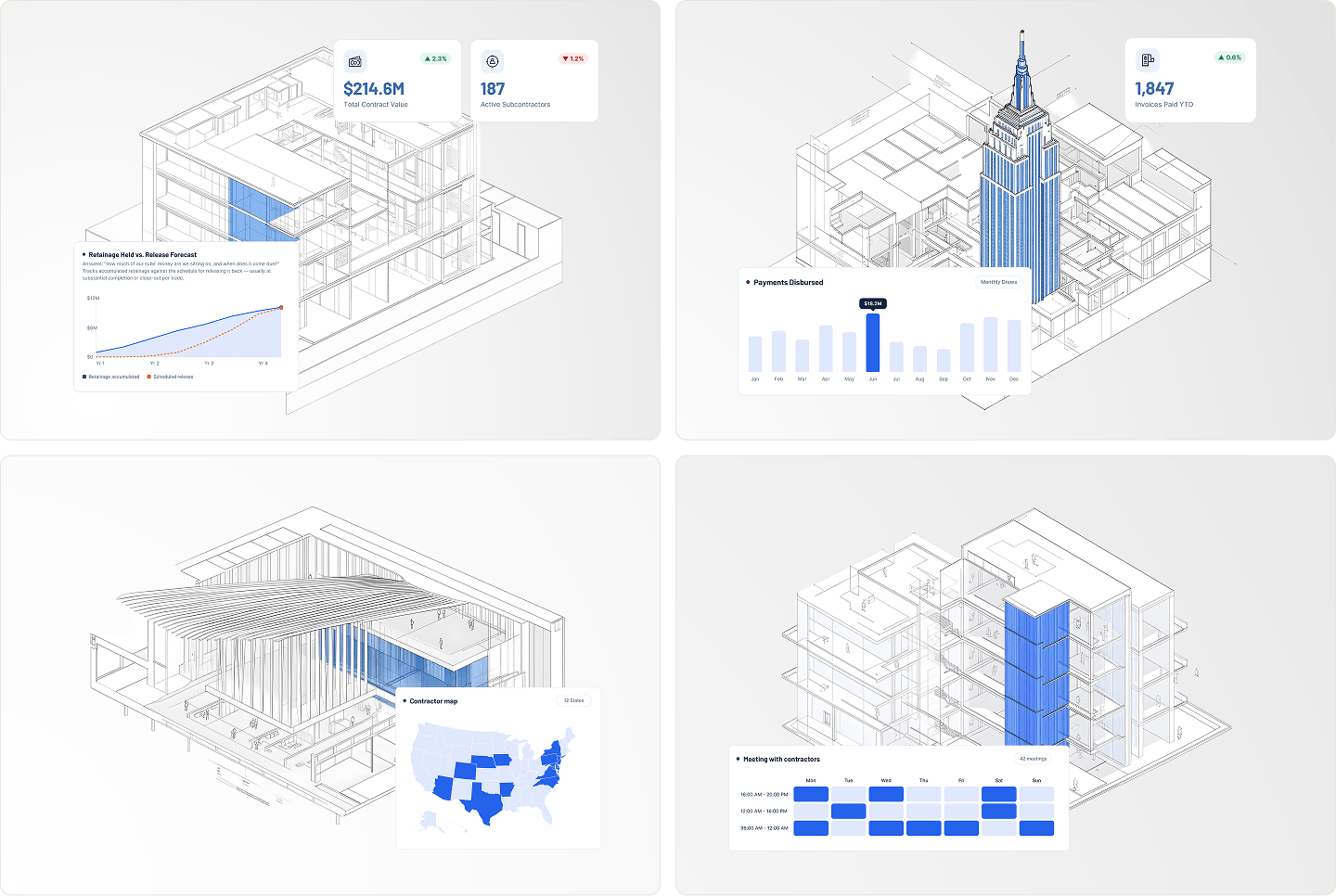
The platform is built around five core modules: Projects, the central entity everything else hangs off; Contracts, including an in-system negotiation flow where parties redline terms asynchronously - accept, reject, counter - instead of over phone and email; Payments, tied to invoices, with an internal "credits" mechanic the client's business actually runs on; Invoices, which can be partial, span multiple line items, and are themselves negotiable, including amendments back into the underlying contract; and a configurable multi-level approval workflow - site manager, then accounting, then further sign-off as needed, configurable per project and per invoice type.
We also added a contract extraction tool: drop in a ten-page contract document and the system pulls the relevant terms in, instead of someone re-keying them by hand. And we took over the design work from the offshore subcontractor - a hand-off that wasn't in the original scope but ended up under our control by the end.
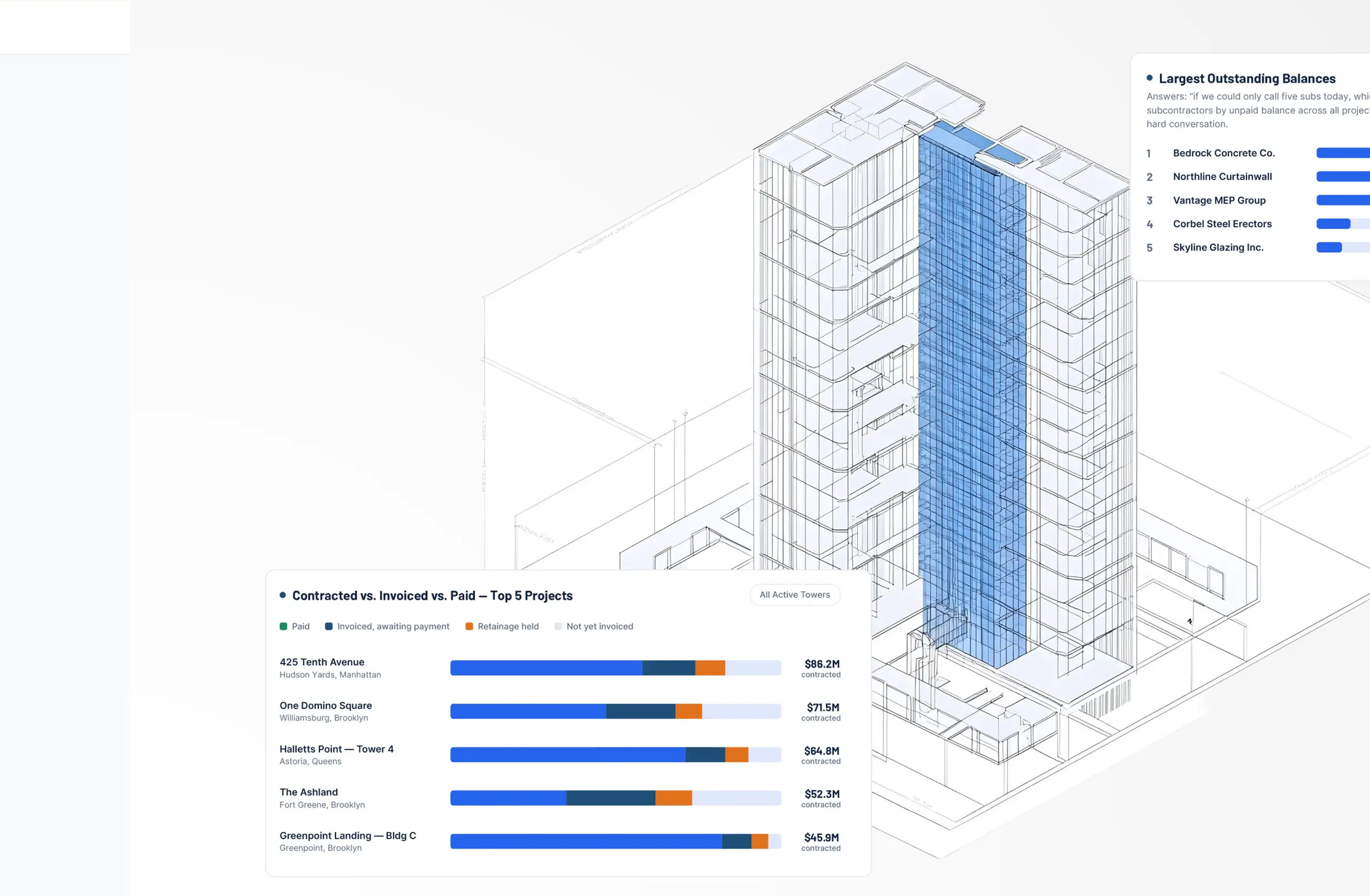
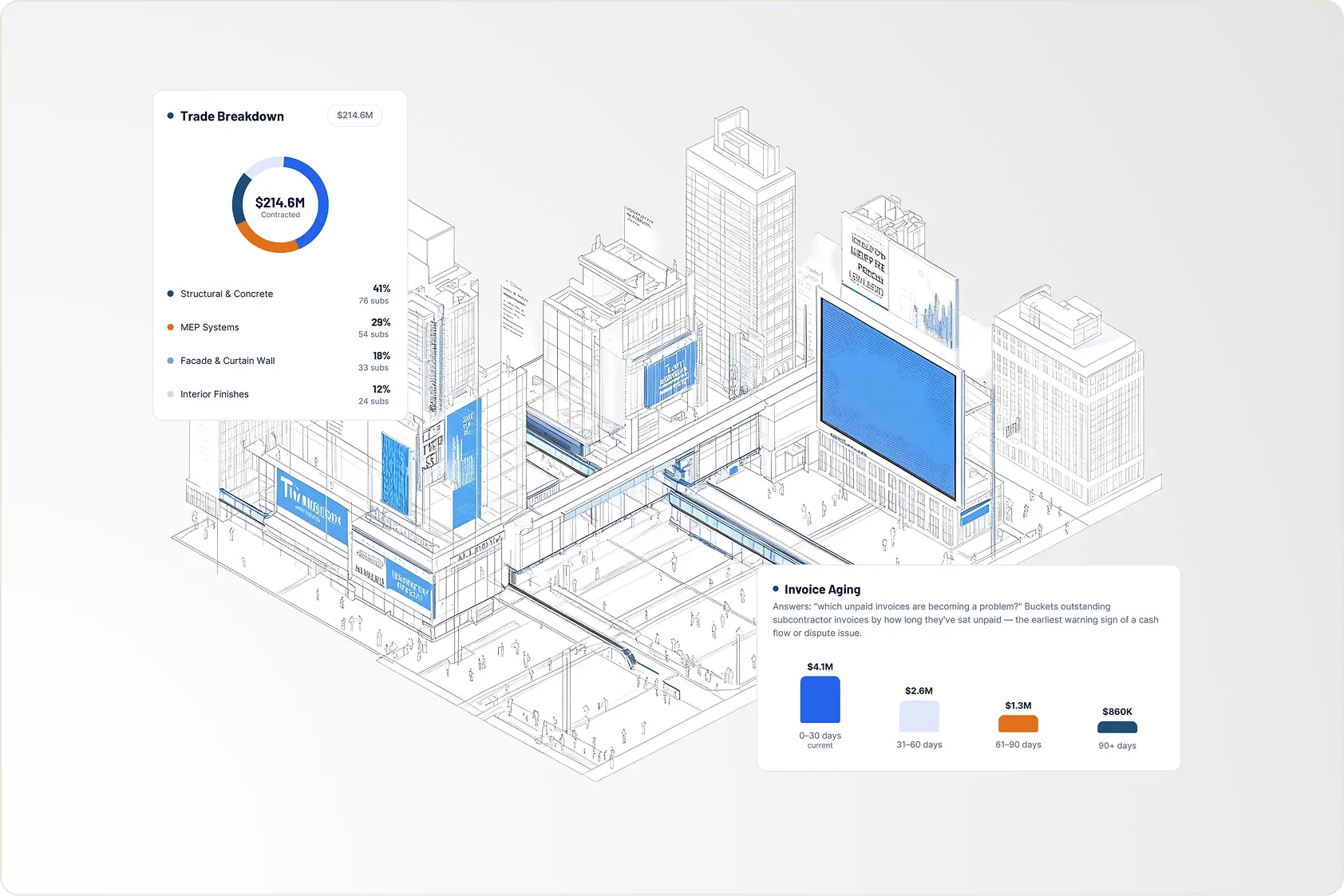
Three user types share the system: contractor, subcontractor, and owner, where the owner gets a portfolio-level view - how far along each project is, how much has been invoiced and paid, where the money is going.
Outcome
A project on track for shutdown in December was delivered in scope and on time. Client sign-off ran over three weeks, on their first real contact with the finished system, and they were genuinely satisfied with what they saw.
The client now runs projects, contracts, invoices, and payments through one system instead of a platform nobody trusted - the foundation they need before they can pursue their original goal of selling it as a B2B subscription product.
The engagement has since shifted from fixed-price to Time & Material, with further modules planned - work planning, billing cycles, a mobile app for on-site photo capture, and an AI track currently under discussion. The client stayed