Explore
AI-native development · AI integration & RAG

Add AI to your product that answers from your own data

For product teams with a backlog item that says “add AI”: answers, search, an assistant or document extraction inside an app your customers already use. Our engineers build it into your product, in your repo and your cloud, with retrieval over your records, permissions that follow your users, sources and a visible “I don't know”, an evaluation set from real cases and a budget cap in the code.

  • 130+People, remote across Poland
  • 44 daysFirst line of code to live, one consumer product
  • 5.0Clutch rating, 11 reviews

This is for you if you need more than a model endpoint

  • Users should be able to ask your product questions

    And get answers from their own records, documents and history, not from a generic chatbot in the corner.

  • Different users see different records

    Retrieval must respect the same access boundaries as the rest of your application, and stay current when documents change.

  • A promising prototype is inconsistent

    It answers well on the questions you rehearsed and badly in the wild: wrong sources, stale answers, no way to tell how often.

  • Nobody can forecast the model bill

    Two thousand calls a day, six thousand tokens each, no cache and no budget per user, and finance is asking questions.

What you get. An integration you can evaluate

Retrieval over your data

Your database and files prepared for search, evaluated for recall on your questions instead of a benchmark, and reindexed incrementally when sources change.

Permissions in retrieval

A user never gets an answer from a document they couldn't open. Tenant and role boundaries are enforced in retrieval, not in the prompt.

Evaluation cases

Real questions with expected outcomes, run on every change to retrieval, prompts or model, so a regression shows up in CI before it shows up in a support ticket.

Usage and cost visibility

A cost model from your expected traffic, budgets per user and per day in the code, and logs and dashboards your team keeps after we leave.

The right model for each step

We compare models on your evaluation cases, response-time requirements and expected running cost. Each step uses a model that meets those requirements, with a more capable model where the results justify its cost, and caching where access rules allow it.

Built where your data lives

Azure OpenAI and Azure AI Search inside your Azure tenant, AWS Bedrock, Google Vertex AI or the providers' APIs. The data boundary is agreed in the scope.

The right tool for the job

When we use an LLM and when we don't

You get the recommendation and the reasoning before the build starts.

An LLM fits

  • Answers from documents and records

  • Reading messy input: emails, PDFs, forms

  • Drafting text a person approves

  • Search that understands what users mean

Something else fits better

  • Predictions from history: machine learning

  • Repeatable decisions with clear rules: a decision graph

  • Domain-specific accuracy at low cost: a custom model

  • Anything plain code already does well

Tech stack. Retrieval, agents, evaluation

Sending every request to the most expensive model is easy. The work is in tuning: we match the model, retrieval, tools and source knowledge to each step, then compare answer quality, response time and cost on your evaluation cases. A more expensive model earns its place only where the results justify it, and each switch is evaluated before release.

Tech stack

  • Anthropic API
  • OpenAI API
  • Gemini API
  • LangChain
  • LlamaIndex
  • Vercel AI SDK
  • pgvector
  • Pinecone
  • Weaviate
  • LangSmith
  • Ragas
  • Redis
  • Python
  • TypeScript
  • Azure OpenAI
  • Azure AI Foundry
  • Azure AI Search
  • Azure AI Document Intelligence
  • AWS Bedrock
  • Google Vertex AI

How we work

Work backwards from acceptable answers

We start with the questions users should be able to ask and the information they may access. The first written scope covers one feature: what it does and for whom, which data it needs and whether you may use it, how we will check the answers and what it will cost to run.

Pirxey gave us the full package - frontend, backend, AI, and data - all under one roof, which meant we never had to coordinate multiple vendors. They thought like product owners, not contractors.

Shahar YahavCo-founder, SignalMesh
  1. Within one business day

    We reply and ask what the feature should do, which data it needs and how you judge a good answer today. Bring representative requests if you have them. NDA first if you want one.

  2. A written scope of one feature

    Free and limited: which approach fits (an LLM with retrieval, a rule or a classic model), whether your data is ready and may be used, how we will measure the answers and what it will cost to run.

  3. A fixed-scope, fixed-price pilot

    One feature, with an evaluation set and acceptance thresholds you approve before we start. If the feature already exists, we first reproduce its failures on your examples and write down the baseline: how often it is wrong, what it costs at your traffic and how long it takes. Changes to it sit behind a switch.

  4. Build in your repo, release on your thresholds

    You see every pull request. We compare quality, cost and response time with the baseline and the thresholds you approved, then you decide: release, limit the audience or keep working. A fallback covers a model that is down or unsure. Handover includes the evaluation set, runbooks, cost dashboards and a call with the engineers who built it.
Proof, not promises

Featured
EdTech · AI
Elite Medical Prep · USA

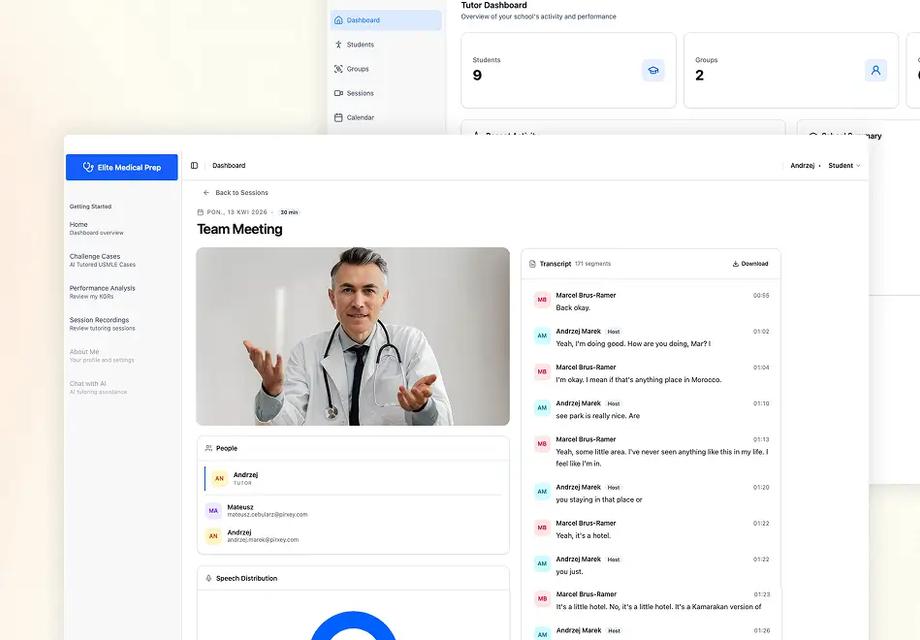
AI-powered medical tutoring for Elite Medical Prep

2 mo broken codebase to deployed
Read
AI · FinTech
Signal Mesh · USA

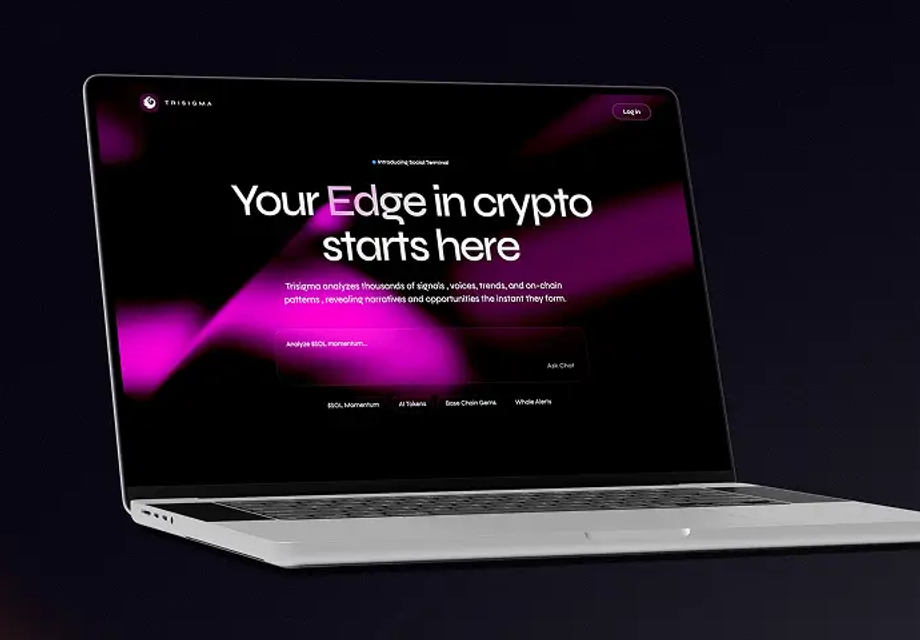
Taking over a crypto platform no one else could ship

Questions about retrieval and product AI

  • No. We work in your repository, your cloud and the tools your team already uses. If one of them gets in the way of the work, we tell you what and why, and you decide.
  • With a 30-minute scoping call. We look at what you have and what you need, then propose a first step with its scope and price before any work starts.
  • No. Retrieval is useful when answers depend on information supplied outside the model, like your records or documents. We check whether that dependency exists before adding a retrieval layer, and sometimes a plain rule or a classic model does the job better.
  • Yes. We keep the feature your users already see and the prompts that work, reproduce the failures on your examples and write down the baseline: how often it is wrong, what it costs at your traffic and how long it takes. The new version runs behind a switch, on your test set first, then for a small share of traffic, with the old one a click away.
  • Yes. We carry your users' permissions into retrieval, so a user never gets an answer built from a document they couldn't open. We inspect your permission model first and test attempts to retrieve restricted material as the wrong user.
  • No. Relevant source material helps but does not eliminate incorrect output. The feature cites its sources, says “I don't know” when the evidence is missing, and we measure how often it is wrong on your test set. Unsure cases go to a person.
  • No. We put model providers behind a shared interface so alternatives can be tested when price or quality changes. Each switch is checked against your evaluation cases, tool calls, response-time requirements and data boundaries before release. On Signal Mesh we ran experiments across OpenAI, Claude and Grok: Grok's style was engaging but gave worse analytical results for that use case, so the choice followed what the product needed.
  • From your expected traffic and the amount of information each request needs, before you commit. Budget limits go into the code. Model choice, caching and a smaller model where it's enough usually move the number more than the prompt, and actual usage is visible after release so the estimate can be checked.
  • Yours. We use the providers' commercial APIs and the scope lists which models see which data. When data must not leave your cloud, open-weight models running there are an option.
  • Yes. Signal Mesh: a RAG pipeline over thousands of social posts behind dashboards and a chat interface, with three LLMs tested and configured in production. Elite Medical Prep: an AI tutor deployed in about two months on AWS Bedrock and OpenAI, with acceptance criteria the client's admins edit themselves.
  • We quote after the written scope: one feature, its acceptance thresholds and its price, before any build starts. Running costs (hosting and model usage) are estimated per month in the same document.
  • No. Reading data and taking action need separate permission and acceptance rules. If the feature can update systems, we agree allowed actions, approval steps and failure handling in the scope. The same boundary applies whether the connection uses an API or MCP.

How we think about this, in our own words

Interactive briefs and articles by our team, picked for this service

Adding AI to your product: will it hold?

An interactive model of an AI feature under real traffic: switch safeguards on and off and see what holds technically and financially.

Read the brief

Pirxey World: how our second brain finds what matters

How our own AI assistant decides what enters its context and why an old source still needs checking, the same questions your retrieval has to answer.

Read the brief

Building AI Products Before the Organization Is Ready

Why AI features fail when nobody has decided who owns the risk, which errors are acceptable and where the cost lands.

Read the article

Start with the questions your users need answered

Additional details (optional)

We reply within one business day.

Pirxey will process your data to answer your inquiry. Details in our Privacy Policy.