
A first version matters now
A new product, an internal tool or a SaaS you'd rather own than rent. You can tell what users need at launch from what can wait.
For founders with a clear problem and a product scope they can prioritize. Our AI Software Factory uses reviewed AI work alongside senior engineering, with acceptance criteria, tests and documentation developed together with you, so the first release has an agreed purpose and a team responsible for it.


A new product, an internal tool or a SaaS you'd rather own than rent. You can tell what users need at launch from what can wait.
Most days. On our 44-day build the product owner put in 313 hours: a full-time job, not a weekly check-in.
A reference product, a competitor or the tool you use today. The clearer the picture, the less there is to write down and the shorter the calendar.
Which tasks agents handle under review and which a senior engineer owns from day one, before you pay for either.
What the first working version must do and what waits, written down before the build, with the price.
Deployed to your accounts. In our 44-day build that meant a web app, an admin console, an API and a background worker.
Agents update tests and documentation in the same change as the code. By the end of our 44-day build: 731 test files and 107 pages of documentation.
Your GitHub from the first commit, your cloud, your keys. Handover with the documentation, or we stay on as the team.
The pace comes from how closely your product owner and our developers work: questions answered the same day, decisions written into the ticket, two short meetings a day. No tool replaces that.
Automated checks catch regressions. Before each release, a QA engineer also tests the agreed user flows and devices by hand, checking usability, unexpected inputs and failure paths.
Scope controls the pace
We assess whether your product fits the Factory model before estimating the work. During delivery, engineers review agent output while senior people own data boundaries, security and decisions that would be costly to reverse. A person accepts every change; no AI decides whether a change is acceptable.

What stayed with me was the communication. Fast, clear, and always with something concrete - a proposal, an update, a solution. We never had to wonder what was happening.

What the first working version takes: the people, the weeks, the budget, and what you need to have ready before day 0.

Essential behaviors and acceptance criteria agreed, open questions named, and the price before the build starts.

Agents write each change with its tests and docs; nine automated checks run; a developer inspects and accepts it; your product owner answers questions the same day. Two short meetings a day.

A QA engineer goes through the release by hand before it ships. We deploy to your accounts and stay for the fixes that launch brings: on our own product the commit rate rose about 60% after go-live and about half of those commits were fixes. Keep us as the team, or take it in-house.
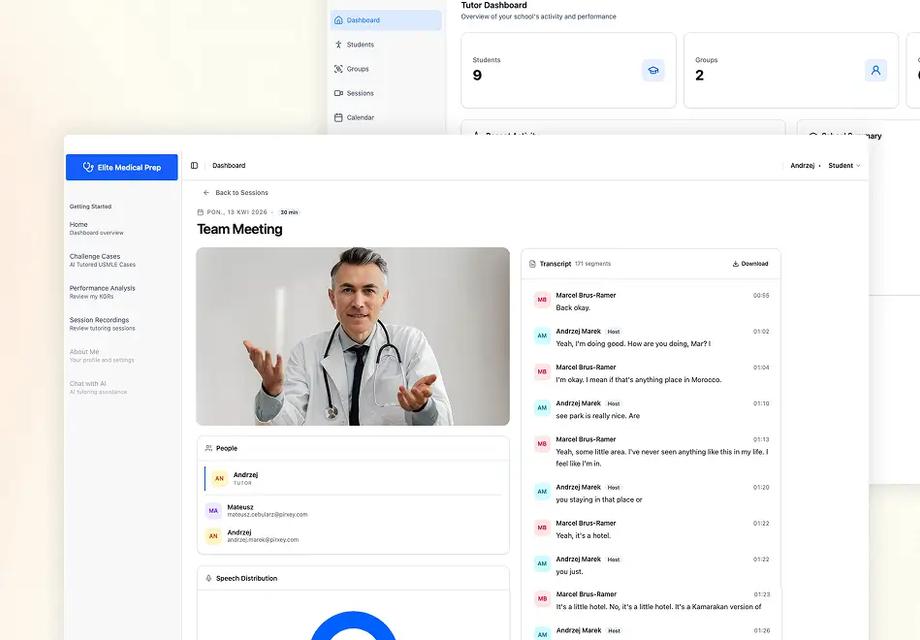

The 44-day build behind this offer, with the team, the accepted changes and the hours laid out as a diagram you can explore.
Read the briefA week of our software factory running fifty tickets end to end, with people making exactly two decisions per ticket.
Read the briefWhy faster coding does not automatically mean a faster launch, and how AI-native delivery shortens time to market while you keep control of quality.
Read the articleTell us what the first version must do, who will use it, what it has to connect to and who on your side can make product decisions.
 Mike KacprowiczBook a callChief Growth Officer


