Explore
AI-native development · Fix an AI-built app

Your app keeps breaking when customers use it

You built it with AI tools and it was fine with one user and test data. Now real customers use it, with real records and a bill that grows every week: a page that takes 20 seconds, a report that double counts, an upload that hangs, a fix that breaks two other things. Our engineers reproduce the bug, fix the cause and test the fix before it ships, in your repo, and leave you with tests, logs and a plan. The first review is free; the fixes are paid work with a fixed scope.

  • ~75%Lower Supabase bill, one Lovable app with 30,000 users
  • 52%Of commits after go-live were fixes, on our own product
  • FreeWritten first review, limited in scope

This is for you if the app grew faster than its foundations

  • Every change breaks something else

    You ask the AI to fix one thing and two others stop working; nobody knows which version is live.

  • Real data behaves differently than test data

    Imports fail on real spreadsheets, reports disagree with each other, records go missing or appear twice.

  • It got slow and expensive

    Pages time out with a few hundred users, and the Supabase, Vercel or OpenAI bill doubled without anyone deciding that.

  • Phones, uploads and background jobs

    The mobile build crashes, large photos hang the app, scheduled jobs silently stop, two people book the same slot.

What you get. Fixes that stay fixed

The cause, found on a copy

We reproduce the bug on a staging copy with real-shaped data and trace it to the data model, the queries, the jobs or the code before anything changes in production.

Fixes in your repo, with tests

Regression tests for the flows that keep breaking, so a fix stays fixed, and a way back for every release.

A bill you can explain

Where the hosting and AI money goes: image transformations repeated on every request, unindexed queries, model calls in a loop. We show you before we change anything.

Monitoring and a written plan

Error tracking, logs and alerts if there are none, so someone on your side knows when something breaks. A list of what is still fragile and what to fix next.

No rewrite by default

When we keep your code and when we don't

We review what you have, then explain what can stay, what needs fixing and what needs replacing. You get the list before agreeing to paid work.

What usually stays

  • Frontend that users already know

  • Working business logic

  • Your data, with a checked migration if needed

  • Your user accounts, with sign-in changes agreed before release

What usually goes

  • Stored procedures that nobody can run twice

  • Logic duplicated across tables

  • Queries and jobs that only work for one user

  • Code that cannot be tested as it is

Tech stack. Where AI-built apps bend first

We troubleshoot apps built with Lovable, Bolt, Replit, v0, Cursor and Claude Code across the frontend, database, hosting, authentication and payments. We profile slow queries and expensive jobs, reproduce failed sign-ins and payment flows, and add regression tests and error tracking. Your builder and stack stay where they hold up.

Tech stack

  • Lovable
  • Bolt
  • Replit
  • v0
  • Cursor
  • Claude Code
  • React
  • Next.js
  • React Native
  • TypeScript
  • Node.js
  • Supabase
  • PostgreSQL
  • Firebase
  • Vercel
  • Railway
  • AWS
  • Supabase Auth
  • Clerk
  • Auth0
  • Stripe
  • Paddle
  • Sentry
  • Playwright

How we work

What happens after you send the bug

We start from what you built, not from a blank repo. On our own product, 52% of commits after go-live were fixes, in four categories: data consistency, real devices, permissions and integrations. Every product we have rescued had the same four, so those are the places we check first in yours.

Well… didn't know what to expect but honestly, now I'm learning much from you guys. Had no idea an external tech partner can be so pro and organized.

OliverCTO, client under NDA
  1. Within one business day: share the bug

    We reply and ask for the bug, the link and read access to the repo or an export. NDA first if you want one.

  2. First review: find the likely cause

    What is fragile underneath, what is fine and what we would fix first, with the likely cause of the failures you sent. Limited scope, typically within a few business days of getting access.

  3. Paid pilot: approve the fixes

    The fixes as a fixed-scope, fixed-price engagement, with acceptance tests you approve before we start, including the flows that must not break again.

  4. Release: small steps with a rollback

    We work on a staging copy, deploy in small steps and keep a way back for every release. You see every pull request and keep the tests and the documentation.
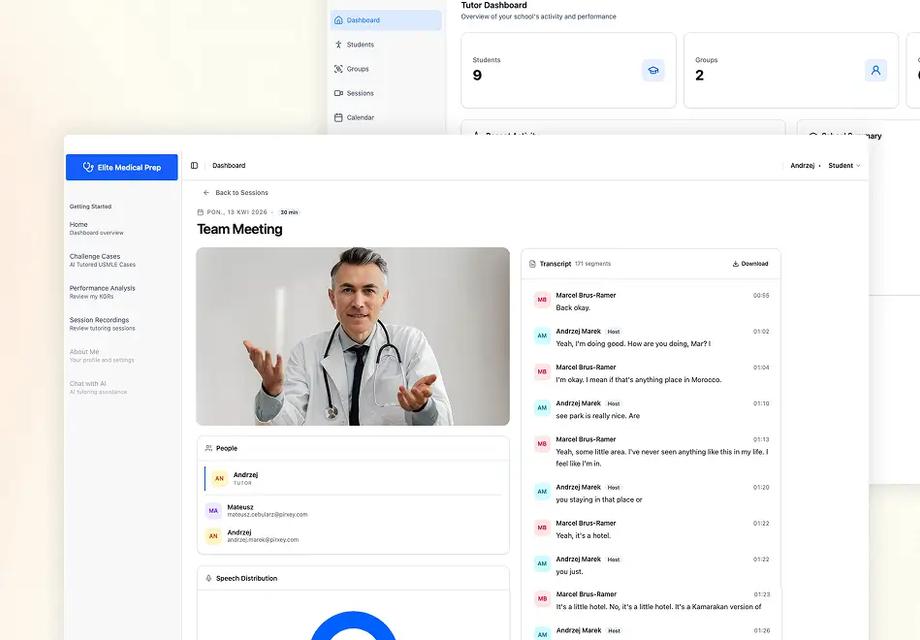

From a broken build to a live product

Featured
EdTech · AI
Elite Medical Prep · USA

AI-powered medical tutoring for Elite Medical Prep

2 mo broken codebase to deployed
Read
AI · FinTech
Signal Mesh · USA

Taking over a crypto platform no one else could ship

Questions about fixing an app that already has users

  • No. We work in your repository, your cloud and the tools your team already uses. If one of them gets in the way of the work, we tell you what and why, and you decide.
  • With a 30-minute scoping call. We look at what you have and what you need, then propose a first step with its scope and price before any work starts.
  • Usually. Most of what breaks under real users lives in the data layer and the queries, not in the screens. We keep the frontend and the logic that works and replace what is fragile underneath. You get the list first.
  • Mostly, yes. The usual causes are repeated work (image transformations, unindexed queries, model calls in a loop) and the fix is engineering, not a bigger plan. We show you where the money goes before we change anything.
  • Yes. A US consumer app built in Lovable on Supabase reached 30,000 users, with slow image loads, uploads that froze the app and a database bill growing every day. Most of the bill was image transformations repeated for every user. We stored optimized assets at upload, added indexes and cleaned 1.5 GB of records a bug had written. The Supabase bill fell by about three quarters and the founder kept editing the app in Lovable. Client under NDA.
  • They should notice fewer bugs and faster pages. We work on a staging copy with real-shaped data, deploy in small steps and keep a rollback for every release.
  • Not directly. We reproduce the bug on a staging copy, take a backup before any migration, and every change to production data has a written plan for going back. Access is the minimum the work needs and you can revoke it at any time.
  • Usually, for the frontend. What moves to code is edited in code from then on, and we write down which is which before we start.
  • If customers cannot use the app yet, start with taking it to production. This service is for an app that is live and breaking. Once it is stable, recurring tickets and updates belong in a maintenance stream.
  • The first written review is free and limited in scope. The fixes are a paid engagement with a fixed scope and price agreed before we start.

  • You can run it yourself with the tests and documentation we leave, hand it to your own team or keep us on as a maintenance stream.

How we think about this, in our own words

Interactive briefs and articles by our team, picked for this service

PirxeyOS: 20 days to build, 30 weeks to keep alive

The whole commit log of our own product: 46% of 587 commits were fixes, in data consistency, devices, permissions and integrations.

Read the brief

Shipping new things while drowning in tickets

How support tickets, regressions and testing take over a team's week once an app has users, and what a dedicated maintenance stream changes.

Read the brief

From a Vibe-Coded Travel App to a Real Product

What we kept and what we replaced when a Lovable app with about 2,000 commits had to hold up in production.

Read the article

Tell us what breaks

Additional details (optional)

We reply within one business day.

Pirxey will process your data to answer your inquiry. Details in our Privacy Policy.