
A decision depends on it
A board meeting, an investor update or next year's budget, and people need something they can click, not a mockup.
For founders and teams with an idea, a process or an AI feature to test before committing a budget. We start with your process, not with code: a business analyst and a senior architect map users, flows and risks with you. Then we build a clickable prototype on the structure and components of a production frontend, so it isn't thrown away after the test: it becomes your product's frontend. Your users try it, and you decide whether to fund the full build.


A board meeting, an investor update or next year's budget, and people need something they can click, not a mockup.
Read the documents, answer the customer, draft the report: you want to see it work on your data, including where it fails.
A shared flow shows where expectations diverge before development expands.
Now the idea needs your data, real logins and an integration the builder doesn't have.
Users, roles, data flows and risks mapped by a business analyst and a senior architect, with a prioritized backlog.
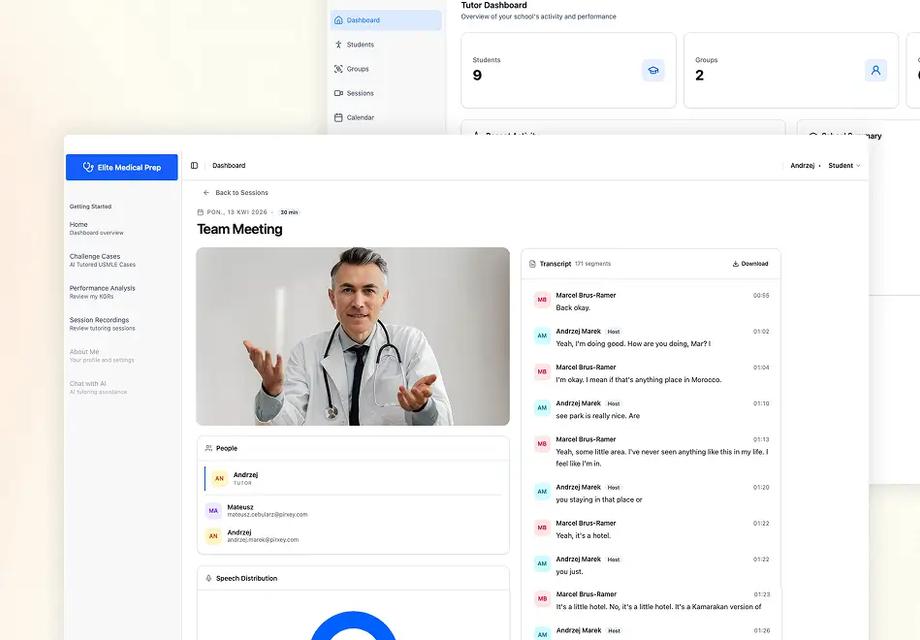
Built with the component structure, design system and routing of a production frontend, on dummy or agreed sample data. When you go ahead, it becomes the target software's frontend and we build the backend, integrations and security underneath.
Tasks and questions for sessions with your users, tied to the assumptions behind the prototype.
What the prototype already is and what is left for production, agreed in writing before the sprint, so nobody mistakes one for the other.
Process mapping and the prototype are quoted as one fixed price with the dates, before we start. If the idea needs more, you hear it before you pay.
Listed in the scope: the blueprint and prioritized backlog, the prototype code in your GitHub, a deployed preview, notes from the user sessions and an estimate for the build.


The frontend: components, design system, routing and screens your users approved
The flow that answers your question, working end to end
Code in your GitHub from the first commit
Logins, permissions and data protection for the pilot



Dummy data replaced by a real backend and database
Integrations, payments and edge cases
Tests, monitoring and scale for real traffic
A full security audit and compliance work
Analysis before code
We choose the interaction that will tell you most about the idea and keep the surrounding product deliberately small. An engineer checks the implementation and marks simulated behaviour before you show it to users.

When you propose something to them, they don't simply say yes - they come back with a pro and con. You're not getting a classic developer who simply does and then you have to fix the thinking yourself. If I had another AI idea and wanted to pursue it, I would just use Pirxey.

We reply and set up a call: what the idea is, who would use it and what decision depends on it. NDA first if you want one.

A business analyst and a senior architect map users, roles, data flows and risks with you. You get a blueprint of how it works, the problems it has to solve and a prioritized backlog.

We design the target architecture, pick the stack and build the prototype on a production frontend, on dummy or agreed sample data. Your users test it.

We record what users did and which assumptions failed. Then you decide: stop, revise, or fund the build, where the prototype's frontend stays and we add the backend, integrations, security and tests underneath in increments.

Why AI builds 95% of what a prototype shows for 5% of the effort, and how to price the edge cases and permissions it leaves out.
Read the brief: The new Pareto: 95/5Nine teams built nine working products in 20 hours at our offsite, and what that taught us about prototyping fast.
Read the article: Nine Products in 20 Hours: Inside Our AI-Native HackathonHow to validate an idea with a simple prototype and real users before paying for a full build.
Read the article: Build an MVP that works: Key steps to launch fast without burning cashWhat you want to test, who would use it, what data it needs and what decision depends on it.
 Mike KacprowiczBook a callChief Growth Officer


