Explore
Consultancy · AI adoption program

Every company deserves its second brain

Connect the knowledge your company already has. We built Pirxey World for our own company of 130+ people, using each person's own logins. We help you build yours with the models you choose, in your cloud or on your servers.

  • 130+People, remote across Poland
  • 12 questionsIn our public AI readiness scorecard
  • 5.0Clutch rating, 11 reviews

This is for you if your AI doesn't know your company yet

  • People use AI alone, so the company learns little

    Useful practices stay with individuals instead of becoming shared ways of working. In Atlassian's 2026 study, 85% of knowledge workers used AI at work and 29% had it built into how they actually work.

  • Answers live in five tools and three heads

    Your assistant cannot connect the records with the context in people's heads. Someone still has to find the right colleague, export the data and explain it all again.

  • Nobody has said what may go to a model

    People are trying AI before anyone has agreed which data it can read or who may see an answer. You need clear boundaries between teams and a policy people can use.

  • Adoption numbers do not explain value

    Seats activated and prompts sent tell you little about the work. Leadership needs to see changes in time, cost and first-pass results.

What you get. A second brain, rules and a way to measure it

A second brain on your accounts

Keep your CRM, documents, chat and project tools. We connect them to shared company knowledge on accounts you own, so your team can ask across systems without moving its work to another platform.

Ask questions, build reports, make decisions

Get reports from live data on demand. Ask through Slack, WhatsApp or voice, and build team skills and scheduled jobs for recurring work. We choose the first use case together and train your team on it.

Measure what changes in the work

A baseline before the pilot, then cost, time and first-pass results, plus a monthly four-minute pulse survey with aggregates only. The top blocker of each edition gets one concrete fix before the next one.

Clear rules for data and access

Written rules define what may go to a model and who approves new uses. Company, department, strategic and private knowledge stay separate, with access checked for the person asking.

Your models, your cloud

Use Claude, ChatGPT, Gemini, Copilot or open models, choosing a model for the task. Run in AWS, Azure, Google Cloud or on your own servers. Your knowledge stays in files you own.

What it is

Your own Second Brain, built inside your company

One place that knows your CRM, your inbox, your spreadsheets and your projects, and answers like someone who has worked at your company for years.

Dedicated to your company

Your data, your people, your way. One brain per company, private by design, with the walls between teams your organization already has.

No revolution. Just connection

Keep your tools and processes. We connect them into one system you can ask, so nobody has to migrate anything or learn a new app.

Expert knowledge, built in

Our engineers bring the AI, data and security know-how. Your team brings the business. The brain learns both and keeps learning.

How it works

All your tools. One brain

Data flows from every platform into the brain, out to every department, between departments, and up to the C-level with total access, visibility and control.

CRM & supportEmail & messengersWorkspace & docsFinance & projects
Second
Brain
Procurement
Marketing
Finance & Accounting
Sales
Operations
C-level
  • Total access
  • Full visibility
  • Full control
Your tools
↓
Second
Brain
↓
Every department, data flowing between them
SalesMarketingOperationsFinanceProcurement
↓
C-level
  • Total access
  • Full visibility
  • Full control

Tech stack. Any model, any cloud, or your own servers

Pirxey World works with 608 pages of written knowledge and 25 tools reached with each person's own logins, as of October 2026. Yours will start from your own tools and documents, so the numbers will differ; the principles and patterns stay the same.

Tech stack

  • Claude
  • ChatGPT / OpenAI
  • Gemini
  • Microsoft Copilot
  • Llama
  • Mistral
  • Ollama
  • vLLM
  • AWS Bedrock
  • Azure OpenAI
  • Google Vertex AI
  • MCP servers
  • Claude Code
  • Codex
  • Cursor
  • Google Workspace
  • Microsoft 365
  • Slack
  • Notion
  • Confluence
  • Jira
  • Linear
  • HubSpot
  • GitHub
  • Pirxey World

How we work

Introduce the practice with its users

We build the first version around a real workflow with the people who use it. Your team helps shape it from the start and takes over with the knowledge to keep it useful.

Honestly, now I'm learning much from you guys. Had no idea an external tech partner can be so pro and organized.
OliverCTO, client under NDA
  1. Map

    Map your tools, knowledge, access boundaries and the questions that slow people down, then choose the first workflow. Establish a baseline and agree what the monthly pulse will track before work begins.

  2. Connect

    Connect the systems that workflow needs through your team's existing logins. Set up shared knowledge on your accounts and check what each person and model may access.

  3. Teach

    Pair with the people doing the work to teach the brain your processes and business context. Build the first skills and scheduled jobs together, and document how to extend them.

  4. Hand over

    Your team takes ownership of the knowledge, configuration and working practices. Review the results together, choose what to improve next and agree where our engineers should stay involved.

Proof, not promises

Featured
EdTech · AI
Elite Medical Prep · USA

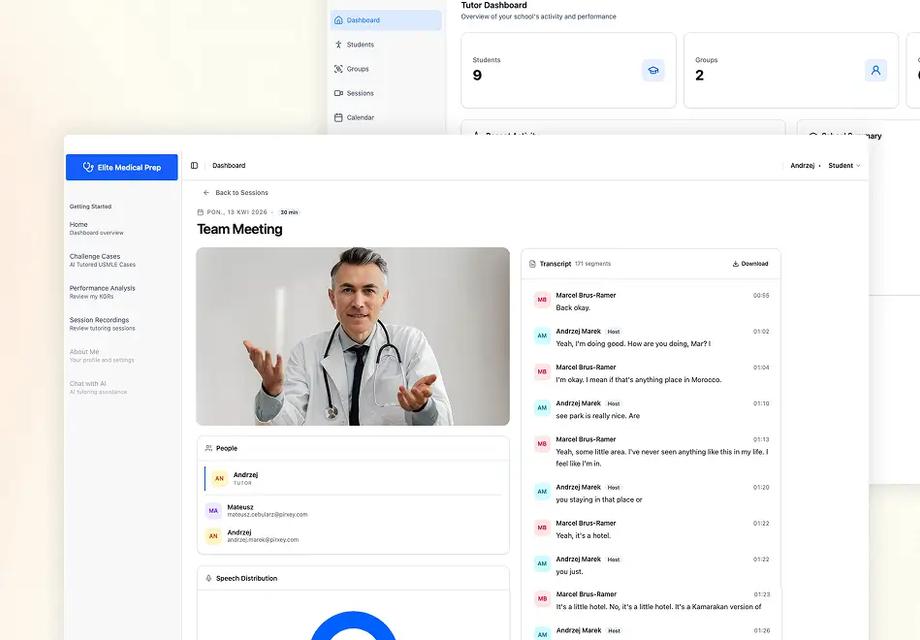
AI-powered medical tutoring for Elite Medical Prep

2 mo broken codebase to deployed
Read
AI · FinTech
Signal Mesh · USA

Taking over a crypto platform no one else could ship

Questions about adopting AI across a company

  • No. Your team keeps its CRM, email, chat, documents and project tools. The second brain adds written company knowledge and connects those tools through each person's own logins. Instead of explaining the business to a blank chat window every time, people can ask with that context already in place.
  • We switched on Pirxey World, our second brain, on 15 May 2026 and publish how it's going. By October six people had made 235 changes to the shared core, and the founder was third on that list. Not everything went well: in September, 26% of the 77 people who answered our survey hadn't heard of Pirxey World at all. You get both lessons.
  • No. Our own survey counts both columns: 912 hours given back and 156 lost in two weeks, across 77 people, by their own estimate. That's a self-report, not a measurement. For your workflow we take a baseline before the start, so reported time and measured change stay separate.
  • No. People learn on the real workflow, on their own accounts. What moved people at Pirxey was someone sitting next to them for an hour, a walkthrough and a first-steps page with seven things to try.
  • No. Ours runs mostly on Claude, and 70% of the people who answered our own survey use models from two or more families. The pattern works with any of them: written knowledge, an index the assistant reads first, recipes, and tools connected with each person's own logins. We set it up on what you already pay for. No migration, no new system to learn.
  • Yes. The knowledge is plain files in a repository you own. The model can be a hosted one in your own cloud account (AWS Bedrock, Azure OpenAI or Google Vertex AI), or an open model such as Llama or Mistral on your own servers, served with Ollama or vLLM. Open models on your hardware keep the text in-house, but you pay for the hardware and smaller models need more checking. We can run the first workflow on both before you decide.
  • The assistant works through each person's own logins, so it sees exactly what that person already sees. Removing someone's access in a tool removes it for their assistant too. Written knowledge gets separate homes: company-wide, per department, a strategic one with fewer readers and a private one per person. Only the question and the text the assistant picks go to the model provider. An answer can still reach someone who couldn't read its sources, so shared knowledge is checked before it's saved. Who should see what was a problem long before AI, and an assistant inherits it, so we review access with you before connecting anything.
  • Readiness work identifies gaps and priorities for a decision: twelve questions across six pillars, a band and the first moves. An adoption program puts the first move into use with your people and measures what happens.
  • We quote after the first conversation, once we know your tools and the first workflow. You get the price before we start.
  • The agreed knowledge structure, workflow configuration, access rules, training material and measurement record stay with your team. You can use the pilot results to decide whether to extend, change direction or stop. New tools and more departments are separate decisions.
  • We bring engineers with AI, integration, data and security experience. You bring the business context, the people who own the workflow and someone to lead adoption internally. Together we turn that knowledge into skills and jobs your team can maintain.
  • Start with a conversation about your tools and a workflow your team repeats. We identify the knowledge and access it needs, agree what success would look like and propose the first version before implementation begins.

How we think about this, in our own words

Interactive briefs and articles by our team, picked for this service

Pirxey World: our second brain, 130 people wide

What a second brain is, the 25 tools ours reaches in six categories and what it changes for a manager, read by each person's assistant with their own logins.

Read the brief

Pirxey World: our second brain, with the access we already had

Own logins for the tools people already use, and separate homes for shared, strategic and private knowledge. The exceptions stay visible.

Read the brief

Pirxey World: our second brain at the leadership table

Client risks, staffing and a new offer: four leadership questions, the records behind them and the gaps still open.

Read the brief

Pick the one workflow your team repeats every week

Additional details (optional)

We reply within one business day.

Pirxey will process your data to answer your inquiry. Details in our Privacy Policy.