Why we built it
The average company runs about 93 applications; a business under fifty people runs about 36 (Okta, SMBs at Work 2024). Every one of them asks the company to work the tool's way. Our time tracking lived in Clockify: fine for one team, awkward for 150 people billing dozens of clients, and impossible to bend to our own process. Roughly 80 PLN a month per person is about 144,000 PLN a year — and we still worked the way the tool worked.
We decided to find out what an AI-native build of our own module actually costs, in money and in the months after. PirxeyOS is that experiment, and it became the operating system we now run the company on.
The first twenty days
One developer, Bartosz Rychlicki, our AI R&D lead, working AI-native from the first commit on February 7, 2026. The build ran through six phases: process discovery, architecture and data model, design and front end, back end and the data migration from Clockify, the API and MCP layer, then security and production deployment with permissions, row-level rules, Sentry and tests. About twenty working days and roughly 50,000 PLN all-in.
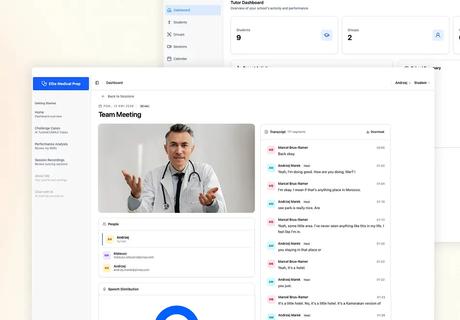
What worked on day twenty: a tracker, a weekly calendar, team scheduling, reports, client billing, tags and projects, a custom design system. It looked finished, because it was — for one user.
Go-live, and the part nobody demos
On July 1, 2026, 150 people moved onto it. The commit log tells the rest. Between February 7 and September 7 the repository gathered 587 commits, 269 of them fixes (46%), 104 feature commits, 81 migrations and 140 test files. Before the go-live week we averaged about 15 commits a week; from it on, about 24 — and 52% of post-launch commits were fixes.
The fixes have categories, and they repeat in every product we have ever rescued:
- Data and consistency — 51 fixes. Entries crossing midnight, duplicates between pages sharing a timestamp, a delete that has to cascade to a running timer, reports over six months that must stay fast.
- Real devices and screens — 35 fixes. iOS zooming into a field, narrow viewports, dark-mode placeholders, empty states.
- Permissions and security — 31 fixes. Who sees whose hours, manager scopes, service-role writes.
- APIs and integrations — 26 fixes. Version skew, input validation, the Clockify import, REST and MCP contracts.
None of it is hard. None of it is visible until a real user hits it. That is the argument of Mission Brief 003, The new Pareto: the visible 95% of a product now arrives in 5% of the time, and the rest still has to be done by someone.
AI-native from day one
Being built by an AI-native developer shaped the product, not just the schedule. A public REST API and an MCP server were designed in, not bolted on: an employee tells a Telegram bot to log an hour and a half on code review, and an agent does it through MCP without touching the UI. 127 of the 587 commits — 22% — carry an AI co-author line from Claude or Codex, fixes included. We count it, because clients ask.
What PirxeyOS is now
Time tracking was the first module. HR, a skills matrix, employee records and onboarding have joined it, six people contribute, and the log keeps growing — we publish the numbers as we go in Mission Brief 004, the PirxeyOS ship's log, with the weekly dataset generated from git history.
What we'd tell you
- The twenty days are real. A working, designed, deployed system with real users in a month is not a pitch. Do not let anyone tell you the first version still takes a quarter.
- Budget for the second half before you celebrate the first. 150 people found 150 ways to use it. The commit rate rose about 60% after launch, and half of it was fixes.
- Plan the four buckets; don't discover them. Data, real devices, permissions, integrations. They show up in every product.
- Own software is an asset — if you staff the tail. The build was roughly a third of one year of the subscription. The honest comparison includes the maintenance stream sized to your users. That is what we help you size.